
Before I started to plan my own film, I first needed to research the film noir/neo noir genre so I could gain some idea of what to include in the film and how to set it up.
Some aspects of my research included:
Watching film noir tutorials on youtube. For example Indie Mogul:

I also watched 'The Big Sleep' starring Humphrey Bogart. After watching this, we were able to note the generic codes and conventions of film noir which include:
Film Noir
- Reflected time period- fear, mistrust, bleakness, with violent, misogynistic, hard boiled characters
- Plots are usually complex, involving the downfall of a man, amnesia suffered by the protagonist was a common theme
- High contrast lighting, deep focus, shadows and low key lighting
- Femme fatale is the dominant attribute of the film noir, presented as a desirable but dangerous woman
- Sometimes the hero is destroyed, but more often than not he overcomes the desirability of the femme fatale and destroys her
- Traditionally monochrome
- Unusual camera angles- tilts, lots of foregrounding, switching from object to object from point of view shots
- The protagonist is usually a detective
- Sharp, witty dialogue, humorous wordplay between men and women
- Rain and night-time are common settings for film noir
I also researched how different people view Film Noir in terms of it being referred to
as a genre or not, for example, Durgnat & Schrader suggest that film noir should not
be seen as genre but rather as a period or movement.
Schrader sub-divides noir into three main categories:
Wartime (1941-6) – ‘private eye and lone wolf’, more talk than action
Postwar realistic (1945-9) – ‘crime in streets, political corruption, police routine’, ‘less romantic heroes’
Psychotic/suicidal impulse (1949-53) – ‘psychotic killer is an active protagonist, despair and disintegration
James Damico, disagrees with Schrader and supports view that noir is a
genre. He claims that the visual style of noir is an iconography.
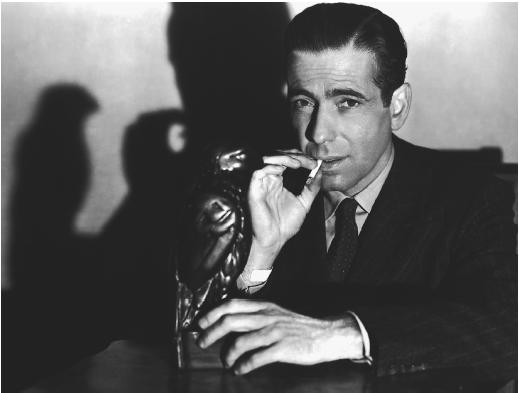


Other research into the film noir genre I have done includes watching 'The Big Heat', a film noir film, to again, further my knowledge of the genre and try and use some of the conventions that are used in film noir in my own film.
NEO- NOIR
We also researched the neo-noir genre and looked at the three different types of neo-noir films according to Leighton Grist which include:
Modern- updates and remakes of classic films of the genre into colour and contemporary settings, e.g. 'The Postman Always Rings Twice'
Modernist- films that radically challenge and interrogate the conventions of film noir, e.g. subjects like the representation of the woman in a sisogynist view. For example, 'Point Blank' and 'Taxi Driver'
Postmodern- 'mash ups', films that pay homage to or allude to the genre. E.g. 'Blade Runner'
Further research we did as a class included watching two short films by director Mal Woolford called 'Ark' and 'Redblack' as they include aspects of film noir.
ARK
 The first short film, 'Ark' was filmed in one shot and included the arc movement, hence the title.
 The main differences I noticed with 'Ark' (neo noir) and classic film noir were:
- Ark was in colour, not black and white
- It didn't start with a crime like film noir normally would
- There was no dialogue in this particular neo noir clip
- It was in the countryside as opposed to being in the busy city
- It was during the day, not at night which is typical of film noir
Some similarities that I noticed included:
- A crime did actually occur
- There was a femme fatale (she seemed to have killed him)
- An unhappy ending occured
- The storyline was hard to follow, a typical film noir trait
REDBLACK

The second film we watched of Mal Woolfords was 'Redblack' When watching 'Redblack' I noticed more similarities and differences with film noir
Some differences were things such as:
- It was in colour, similarly to 'Ark'
- It was filmed in a car rather than in a stationary building or outside
- The clip didn't begin with a crime
- There were flashes of colour and sound in the transitions between the clip
Similarities between 'Redblack' and classic film noir include:
- There was a femme fatale (she had set him up for her crime)
- It was filmed at night, a typical trait with film noir
- The clip was in an urban setting- the streets of London
- There was a short voiceover at the beginning
- It was in low key lighting with high contrast
Other neo-noir films that I watched included 'Pulp Fiction' and 'Taxi Driver', again helping me to see the conventions of neo-noir films ad use them in my own short film


I also watched two other neo-noir film called 'Shadowline' and 'Stripes'. Because I am thinking of basing my own film on the neo-noir genre, watching these films enables me to pick up conventions that are typical to neo-noir genre.
STRIPES

- Themes of voilence
- Close up of objects
- Apartment setting
- Harsh lighting
- Flimed in colour
- Unusual shots/angles
We have been studying narrative theories and Tzvetan Todorov's five stages of narrative can be applied to 'Stripes'

1) Equilibrium - man in appartment making breakfast
2) Disruption of equilibrium - black man breaks in, ties him up
3) Realisation that disruption has occured - who has tied him up? why has he tied him up?
4) Attempt to repair damage of the disruption - approaches with knife and gets revenge
5) Restoration of equilibrium - justice is recieved when revenge is carried out
SHADOWLINE

The neo-noir elements that 'Shadowline' has include:
- Apartment setting
- Urban setting
- Difficult and confusing storyline
- Themes of crime- kidnapping
Notes on Film Noir, Paul Schrader
The Hard-Boiled Tradition
In the thirties, authors had created the 'tough', a cynical way of acting and thinking that separated one from the world of everyday emotions.
The hard boiled writers had their roots in pulp fiction or journalism, and their protagonists lived out a narcissistic, defeatist code.
The hard boiled hero was, in reality, a soft egg compared to his existential counterpart, but he was a good deal tougher than anything American fiction had seen.
The most hard boiled of Hollywoods writers was Raymond Chandler, whose script of Double Indemnity was the best written and most characteristically noir of the period.
Stylistics
There is not yet a study of the stylistics of film noir, and the task is certainly too large to be attempted.
Like all film movements, film noir drew upon a reservoir of film techniques and given the time one could correlate its techniques, themes, and casual elements into a stylistic schema.
Here are some more in depth characteristics of film noir:
- Majority of scenes are lit for night. Gangsters sit in offices at midday with the shads pulled and the lights off. Ceiling lights are hung low and floor lamps are seldom more than five feet high
- Actors and setting are often given wqual lighting emphasis. An actor is often hidden in the realistic tableau of the city at night, and, more obviously, his face is often blacked out by shaddow as he speaks.
- Compositional tension os preferred to physical action. a typical film noir would rather move the scene cinematographically around the actor than have the actor control the scene by physical action.
-There seems to be an almose Freudian attachment to water. The empty noir streets are almost always glistening with fresh evening rain and the rainfall tents to increase in direct proprotion to the drama.
- A complex chronological order is frequently used to reinforce the feelings of hopelessness and lost time. the manipulation of time, whether slight or complex is often used to reinforce a noir principl: the how is more important that the what.
Themes
Raymond Durgnat has delineated the themes of film noir in an article in the British Cinema magazine. Durgnat divides film noir into eleven thematic categories and covers the whole gamut of noir production, thematically organising over 300 films.
In each of Durgnats noir themes, one finds that the upwardly mobile forces of the thirties have halted; frontierism has turned to paranoia and claustrophobia. The small-time gangster has now made it big and sits in the mayor's chair, the private eye has quit the police force in disgust and the young heroine, sick of going along for the ride, is taking others for a ride.
Durgnat, however, does not touch up on what is perhaps the overriding noir theme: a passion for the past and present, but also a fear of the future.
Noir heroes dread to look ahed, but instead try to survive by the day, and if unsuccessful at that, they retreat to the past. thus film noir's techniques emphasise loss, noistalgia, lack of clear priorities, and insecurity.
In such a world style becomes pramount; it is all that separates one from meaninlessness.
Chandler described this fundamental noir theme when he described his own fictional world: 'It is not a very fragrant world, but it is the world you live in, and certain writers with tough minds and a cool spirit of detachment can make very interesting patterns out of it.'
Research of film noir and neo noir posters
FILM NOIR

- The femme fatale is in the forefront and her whole body can be seen which gives a position of power and makes her presence known
- The male is hidden behind blinds and only his face can be seen, depicting him as the weaker character in the film and the victim that he will probably be
- The dark colours, grey and black, connote the dark tone of the film- one which is bleak and miserable throughout
- The title of the film is bold and also a similar colour to the femme fatales dress, again connoting the power she has throughout the film
NEO NOIR

- The title 'The Killer Inside Me' connotes violence, a typical trait in neo noir films
- The women are dressed sexually, Jessica Alba at the front is in her underwear and Kate Hudson is wearing red lipstick, connoting sexuality
- The dark background colours again connote the tone of the film- dark, mysterious and miserable


